
How a reel strip is laid out
11 August 2026 · filed under Reels
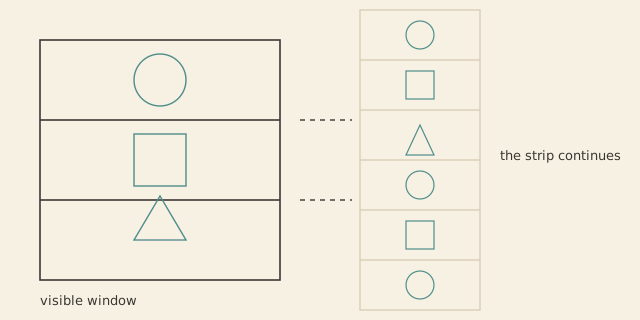
The reel you see on screen is a window onto something longer. Three visible positions do not mean three symbols; they mean three of however many are printed on the strip behind them. Almost everything interesting about a machine lives in that hidden length.
It is easy to look at a set of reels and count what is in front of you. Three rows, five columns, fifteen symbols, and the arithmetic seems to be done. That count describes the window, not the machine. Each column is a strip, and the strip carries a sequence of symbols that scrolls past and stops with three of them showing.
The length of that strip and the mix of symbols printed on it are what shape the way a game feels. A strip that carries a great many low-value symbols and one high-value symbol behaves quite differently from a strip carrying an even spread, even when the two look identical while spinning. The window is the same. What is behind it is not.
Why symbol counts beat reel counts
People often describe a game by its grid, as a three-by-five or a six-by-four. The grid tells you how much of each strip is visible at once, which matters for how crowded the screen looks and how many positions a win can occupy. It says very little about how often any particular symbol turns up.
Two machines with the same grid can be composed entirely differently. One might spread its premium symbols across every strip. Another might keep them off the first column altogether, so a promising row can never begin the way you expect. Reading the grid tells you the shape of the stage. Reading the composition of the strips tells you the play.
Where the strip shows itself
You cannot see a strip directly, but it leaves marks. If a symbol appears stacked, several positions of it sit adjacent on the strip. If a symbol only ever appears on alternate columns, it has simply not been printed on the others. If a special symbol seems to arrive in clumps, it is likely grouped rather than scattered.
Watching for those marks is more useful than watching for patterns in outcomes. The outcomes are produced afresh each spin. The composition of the strips is a fixed piece of design, and it is the part a curious player can actually learn to read.