
Reading a paytable from the top row down
19 July 2026 · filed under Paytables
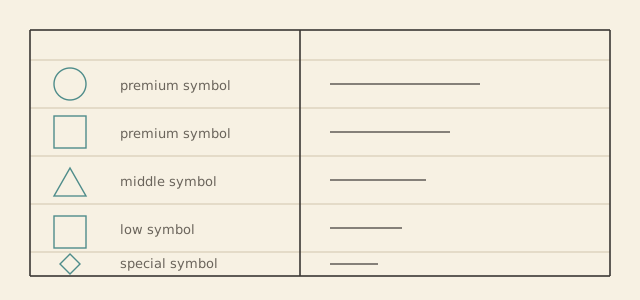
The paytable is usually tucked behind a small button and skipped. It is the only part of a machine that describes itself in writing, and reading it takes about a minute.
Somewhere behind an information button, every machine carries a page that sets out how it works. It is not marketing copy. It is a specification, and it is the fastest way to understand what you are about to sit in front of.
Start at the extremes
Look at the largest entry and the smallest entry first, and see how far apart they are. If the top line is enormously larger than the bottom one, most of the game's value is concentrated somewhere rare. If they are close together, the game pays in small pieces and will feel steadier.
That single comparison tells you more about how a session will feel than any label attached to the game elsewhere.
Then read the specials
After the ordinary symbols come the exceptions, and the exceptions are where the design lives. Which symbol substitutes for others, and does it do so everywhere or only on certain columns. Which symbol triggers a bonus round, how many of it are needed, and whether they must land in particular places.
These conditions are stated in plain sentences, and they are frequently more restrictive than the graphics suggest. A substitute that only appears on the middle three columns is a very different thing from one that appears anywhere.
Finish with the round rules
If there is a bonus round, the paytable will say what happens inside it and whether it can extend itself. Whether a round can be re-triggered, and whether anything carries over between spins inside it, are the two details that most change what the round is worth.
None of this makes a machine predictable. It makes it legible, which is a smaller and much more achievable thing.